
Georgian Wine Guide
Amber Wine Explained:
What It Is, How It's Made,
and What to Pair It With
Long before stainless steel tanks and marketing labels, winemakers in Georgia were fermenting white grapes with their skins in clay vessels buried underground. The result? A textured, tannic, deeply expressive wine that looks golden-amber and tastes like nothing else on the table.

What Is Amber Wine?
At its core, Amber Wine is white wine made like red wine. Instead of separating the grape skins from the juice before fermentation, the skins remain in contact with the liquid. This extended skin contact extracts color, tannins, texture, and aromatic compounds, transforming pale juice into a rich amber tone.
The deeper answer? It's a method that reshapes structure, flavor, and identity. Unlike light and crisp conventional whites, amber wine carries grip and dimension. It feels layered and textured rather than fleeting.
It's white wine — but with backbone.

Georgian Amber Wine: The Origin Story
Georgia is widely considered the birthplace of wine. For over 8,000 years, winemakers have used clay vessels called qvevri to ferment and age their wines underground. This isn't a romantic marketing angle — it's documented archaeological history.
The underground environment creates stability without mechanical intervention. The shape encourages natural circulation of skins and solids. Gravity does the work. Time does the rest.
Qvevri amber wine is distinct because the method isn't just technical — it's cultural. Georgian amber wine lives within the supra, the traditional feast where wine, food, poetry, and conversation intertwine.
Qvevri Amber Wine: How It's Made
The production of qvevri amber wine follows a rhythm shaped by tradition rather than industrial speed. Minimal intervention. Maximum expression.
Amber Wine Taste Profile: What to Expect
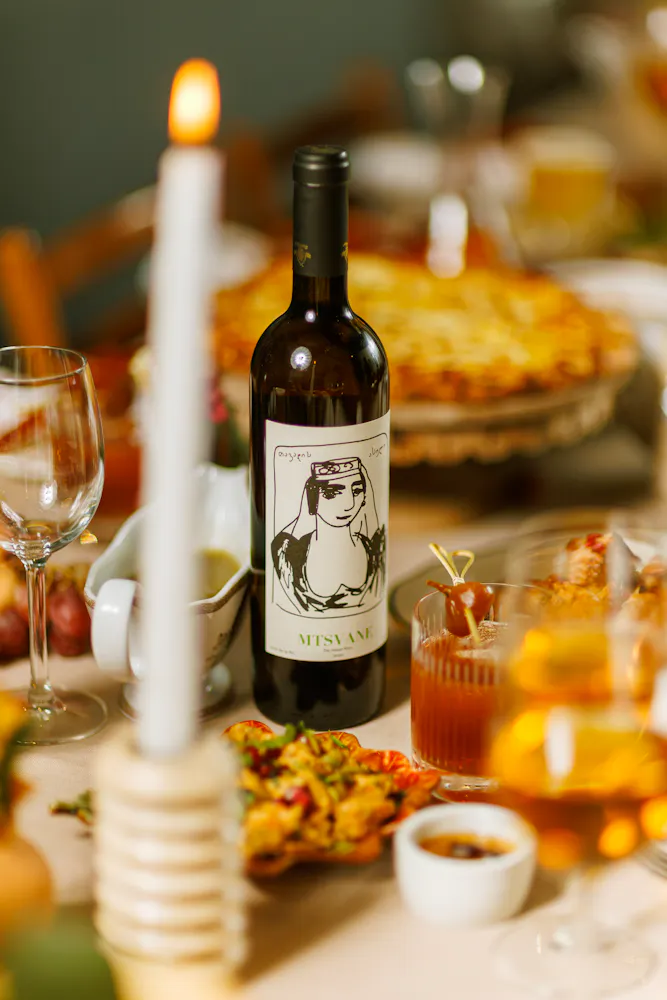
The amber wine taste profile is one of complexity and contrast. Texture plays a major role — there is tannic structure, often compared to a light red wine. The finish can be savory rather than fruity.
First-time drinkers sometimes pause after the first sip. That pause is important. Amber wine doesn't aim to be easy — it aims to be expressive. Once understood, it becomes deeply compelling.
Orange Wine vs Amber Wine: Are They the Same?
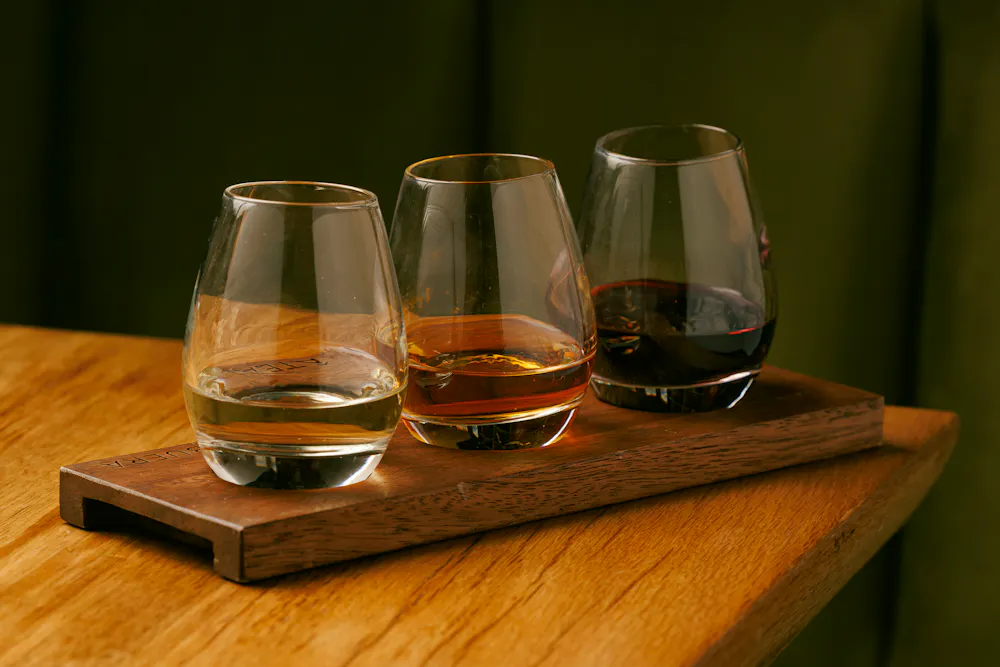
"Orange wine" is a broad global term describing skin-contact whites made anywhere. "Amber Wine," especially in reference to Georgian amber wine, highlights the traditional qvevri method and cultural lineage.
All Georgian amber wine can be described as orange wine, but not all orange wine reflects the historical depth of Georgian amber wine. It's the difference between imitation and inheritance.

Amber Wine Food Pairing: What to Serve It With
Amber wine bridges the gap between red and white — it holds up to rich flavors yet maintains brightness. Where delicate white wine might fade, amber wine stays present.
Khachapuri
The richness of Georgian cheese bread balances beautifully with amber wine's tannic grip.
Khinkali
Juicy dumplings with spiced fillings echo the wine's earthy complexity.
Grilled Meats (Mtsvadi)
Smoky char enhances the wine's tea-like depth — an effortless match.
Walnut-Based Dishes
Georgia's iconic walnut sauces harmonize with the nutty and oxidative elements.
Aged Cheeses
Salt and tannin create a powerful, memorable contrast.
Beyond Georgian Cuisine
Roasted vegetables, mushroom risotto, Moroccan spices, and certain Thai curries also shine.

How to Serve Amber Wine Properly
Serving temperature matters. Aim for 12–14°C — slightly cooler than room temperature. Use a larger wine glass to allow aromatics to expand. Consider decanting structured bottles and allow time in the glass for evolution.
Amber wine is dynamic. It changes as it breathes. Rushing it misses the point.
Is Amber Wine Natural Wine?
Many producers of Georgian amber wine follow low-intervention principles: native yeast fermentation, minimal filtration, and restrained sulfur use. However, "natural wine" is not a regulated term. Not every amber wine is natural, and not every natural wine is amber.
Amber wine's identity isn't built on trend-based labeling. It's built on method and history — 8,000 years of it.
Why Amber Wine Is Having a Global Renaissance
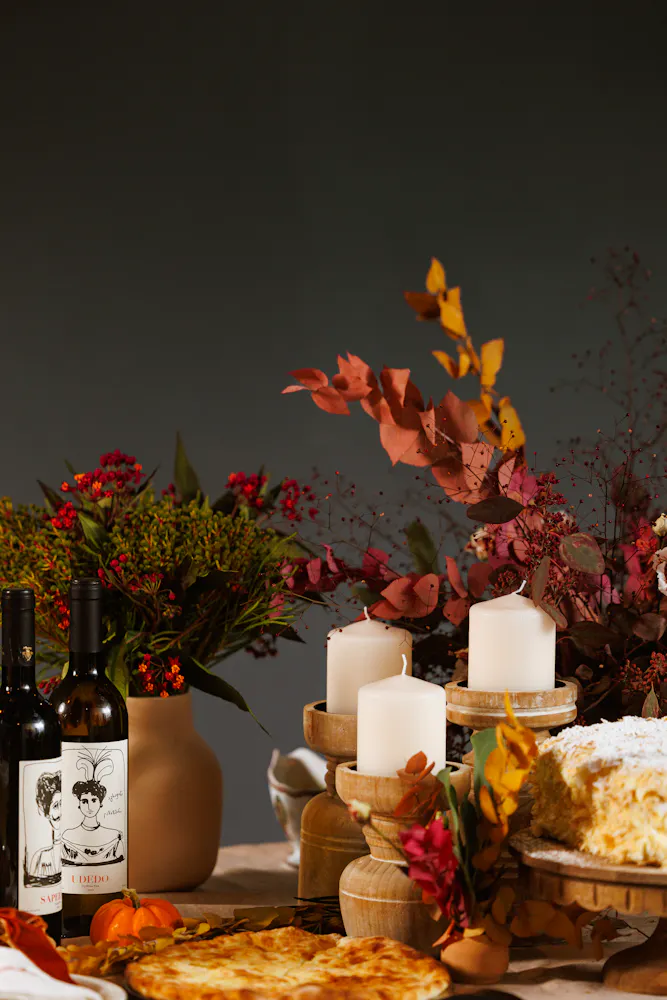
Amber Wine feels both ancient and radically modern. In a global wine market often driven by polished uniformity, amber wine offers character. It resists neutrality. It embraces individuality.
Modern drinkers are increasingly curious about authenticity and heritage. Georgian amber wine provides both without compromise. Its global revival isn't accidental — it's a rediscovery.

The Cultural Meaning of Amber Wine in Georgia
In Georgia, wine is not separated from life. It accompanies toasts, rituals, and celebrations. Georgian amber wine plays a central role in the supra, where a tamada leads structured toasts that move from gratitude to memory to hope.
Wine becomes language. It becomes connection. Amber Wine, in this context, is not simply fermented grape juice. It is continuity. It is inheritance poured into a glass.
It challenges the assumption that white wine must be crisp and light — expanding the vocabulary for curious drinkers everywhere.
Amber Wine carries history, texture, and structure.
It belongs at a table filled with conversation.
Ready to experience Georgian amber wine the way it was meant to be shared?
Gather your people. Let's Chama.